
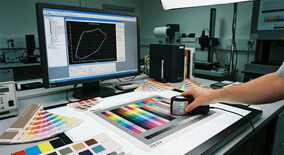
Колір - це складна наука, яка поєднує фізику світла, хімію барвників і психологію сприйняття. Для друкарів розуміння колірних просторів, ICC-профілів та процесів калібрування є критично важливим для досягнення предсказуемих та точних результатів. У цій статті ми детально розберемо, як працює колірна наука в контексті сучасних технологій друку.
▶ Основи колірної теорії для друку
Колір виникає як результат взаємодії світла з об'єктом та його сприйняття людським оком. У друці ми маємо справу з двома принципово різними способами створення кольору: адитивним (додаванням світла) та субтрактивним (відніманням світла).
Монітори використовують адитивну модель RGB (Red, Green, Blue), де колір створюється шляхом змішування червоного, зеленого та синього світла. Чим більше світла додається, тим яскравіше стає колір, а при максимальній інтенсивності всіх трьох компонентів отримується білий колір.
Друк працює за субтрактивною моделлю CMYK (Cyan, Magenta, Yellow, Key/Black), де колір створюється шляхом поглинання певних довжин хвиль світла пігментами чорнила. Чим більше чорнила наноситься, тим темніший стає відбиток, а теоретично при повному покритті всіма трьома основними кольорами має утворитися чорний колір.
▶ Колірні простори та їх обмеження
Кожен пристрій здатен відтворити лише обмежену кількість кольорів, що називається колірною гамою (gamut). Колірна гама RGB-моніторів зазвичай ширша за CMYK-принтери, особливо в області яскравих зелених та синіх відтінків.
▸ sRGB
- Кількість кольорів: 16.7 мільйонів
- Застосування: Веб, стандартні монітори
- Особливості: Найпоширеніший стандарт
▸ Adobe RGB
- Кількість кольорів: 16.7 мільйонів
- Застосування: Професійна фотографія
- Особливості: Ширша гама, особливо зелених
▸ CMYK (ISO Coated)
- Кількість кольорів: ~1 мільйон
- Застосування: Офсетний друк
- Особливості: Обмежена гама, залежить від паперу
▸ CMYK+додаткові
- Кількість кольорів: Залежить від кількості
- Застосування: Широкоформатний друк
- Особливості: Розширена гама спот-кольорами
▶ ICC-профілі: серце системи колірного управління
ICC-профіль - це файл, який описує, як конкретний пристрій (монітор, принтер, сканер) відтворює кольори. Розроблений International Color Consortium, цей стандарт дозволяє різним пристроям "спілкуватися" одною мовою кольорів.
▶ Структура ICC-профілю
ICC-профіль містить дві ключові таблиці перетворення:
- LUT (Look-Up Table) A2B - перетворення з колірного простору пристрою (RGB/CMYK) у незалежний простір (Lab/XYZ)
- LUT B2A - зворотне перетворення з незалежного простору у простір пристрою
Ці таблиці створюються шляхом вимірювання реальних кольорів, які виробляє пристрій, за допомогою спеціальних інструментів - спектрофотометрів або колориметрів.
▶ Типи ICC-профілів для друку
Профілі вхідних пристроїв (сканери, камери) описують, як пристрій реєструє кольори. Профілі дисплеїв контролюють відображення кольорів на моніторі. Профілі виводу (принтери) найважливіші для нас - вони описують, які кольори може відтворити принтер з конкретними чорнилами на певному матеріалі.
Для DTF-принтерів профіль повинен враховувати специфіку термотрансферної плівки та її взаємодію з різними тканинами після термопресування. Це робить створення якісного профілю особливо складним завданням.
▶ Процес калібрування принтера
Калібрування - це процес приведення пристрою до еталонного стану. Для принтерів це означає забезпечення стабільного та передбачуваного відтворення кольорів.
▶ Підготовка до калібрування
Перед початком калібрування необхідно:
- Переконатися в чистоті друкувальних голівок
- Виконати alignment (вирівнювання) голівок
- Дати принтеру "прогрітися" - виконати кілька тестових роздруків
- Забезпечити стабільні умови навколишнього середовища (температура 20-25°C, вологість 45-65%)
- Використовувати якісні чорнила та порошок для DTF друку
▶ Створення тестової мішені
Для створення ICC-профілю використовуються стандартизовані колірні мішені:
▸ IT8.7/4
- Кількість патчів: 1617
- Призначення: Базовий CMYK профіль
- Точність: Середня
▸ ECI 2002
- Кількість патчів: 1485
- Призначення: Поліпшений CMYK
- Точність: Висока
▸ i1Profiler
- Кількість патчів: До 6000+
- Призначення: Професійні профілі
- Точність: Найвища
Мішень друкується без використання колірного управління (в режимі "No Color Management" або з профілем за замовчуванням принтера). Важливо забезпечити максимальну якість друку та дати достатньо часу для висихання чорнил перед вимірюванням.
▶ Вимірювання та створення профілю
Надрукована мішень вимірюється за допомогою спектрофотометра. Популярні інструменты включають:
- X-Rite i1Pro - професійний стандарт
- Datacolor SpyderPrint - баланс ціни та якості
- Konica Minolta FD-9 - швидкий денситометр
Програмне забезпечення для створення профілів:
- i1Profiler (X-Rite) - найпопулярніший інструмент
- ProfileMaker (X-Rite) - професійне рішення
- ArgyllCMS - безкоштовна альтернатива
- ColorPort - інтегроване рішення для RIP
▶ Особливості DTF та сублімаційного друку
Сублімаційні принтери мають свої унікальні колірні характеристики. Сублімаційні чорнила змінюють свій відтінок в процесі переходу з твердого стану в газоподібний, що ускладнює точне прогнозування фінального кольору.
▶ Вплив температури на колір
При сублімації різні кольори реагують на температуру по-різному:
- Жовтий - найстабільніший, мало змінюється
- Маджента - може зміщуватися в бік червоного при перегріві
- Ціан - схильний до зміщення в бік зеленого
- Чорний - може ставати коричневим при недостатній температурі
▶ Колірні профілі для різних матеріалів
Кожен тип матеріалу потребує окремого ICC-профілю:
▸ Поліестер 100%
- Особливості профілю: Найширша гама
- Колірна гама: 95-98% sRGB
- Рекомендації: Еталонний матеріал
▸ Бавовна з покриттям
- Особливості профілю: Обмежена насиченість
- Колірна гама: 70-80% sRGB
- Рекомендації: Збільшити насиченість
▸ Метал з покриттям
- Особливості профілю: Високий контраст
- Колірна гама: 90-95% sRGB
- Рекомендації: Контроль чорної точки
▸ Кераміка
- Особливості профілю: Теплі відтінки
- Колірна гама: 85-90% sRGB
- Рекомендації: Корекція балансу білого
▶ Програмне забезпечення для колірного управління
▶ RIP-програми з підтримкою ICC
RIP (Raster Image Processor) - це програма, яка перетворює векторні та растрові зображення у формат, зрозумілий принтеру. Професійні RIP обов'язково включають систему колірного управління:
- EFI Fiery - стандарт індустрії, відмінна підтримка ICC
- Onyx ProductionHouse - потужні інструменти колірного управління
- Caldera - європейський лідер з акцентом на якість кольору
- PhotoPRINT DX - зручний інтерфейс, хороша інтеграція
- Wasatch SoftRIP - надійне рішення для широкоформатного друку
▶ Налаштування колірного управління в RIP
Правильне налаштування колірного управління включає:
- Вибір вхідного профілю - зазвичай sRGB або Adobe RGB
- Призначення профілю принтера - створеного спеціально для вашої комбінації принтер+чорнила+матеріал
- Встановлення intent (намірів рендерингу): Perceptual - для фотографій з широкою гамоюRelative Colorimetric - для логотипів та точних кольорівSaturation - для яскравих графічних елементівAbsolute Colorimetric - для корректурних роздруків
- Perceptual - для фотографій з широкою гамою
- Relative Colorimetric - для логотипів та точних кольорів
- Saturation - для яскравих графічних елементів
- Absolute Colorimetric - для корректурних роздруків
- Компенсація чорної точки - зазвичай увімкнена
▶ Валідація та підтримка якості
▶ Контроль якості профілю
Після створення профілю його якість необхідно перевірити:
- ΔE (Delta E) - міра колірної різниці. Значення менше 2 вважається відмінним, менше 5 - прийнятним
- Тестові зображення - роздруківка стандартних тестів (Fogra, GRACoL)
- Візуальна оцінка - порівняння з еталонними зразками
▶ Періодичне оновлення профілів
ICC-профілі потребують регулярного оновлення через:
- Знос друкувальних голівок
- Зміну партій чорнил
- Змінні умови навколишнього середовища
- Засмічення системи подачі чорнил
Рекомендується перевіряти профілі щомісяця та переробляти щоквартально або при зміні матеріалів.
▶ Поширені проблеми та їх вирішення
▶ Невідповідність кольорів
Найчастіші причини невідповідності кольорів між монітором та роздруком:
- Некалібрований монітор - перший крок завжди калібрувати дисплей
- Неправильний ICC-профіль - використання застарілого або чужого профілю
- Різні умови освітлення - те, що виглядає добре при лампі розжарювання, може погано виглядати при денному світлі
- Метамеризм - явище, коли кольори виглядають однаково при одному освітленні, але різно при іншому
▶ Нестабільність кольору
Якщо кольори змінюються від роздруку до роздруку:
- Перевірте стан друкувальних голівок
- Переконайтеся в стабільності температури та вологості
- Використовуйте якісні чорнила та матеріали
- Дайте достатньо часу для стабілізації принтера після увімкнення
▶ Майбутнє колірного управління
▶ Нові технології
Індустрія друку постійно розвивається:
- Розширені колірні гами - використання додаткових кольорів (оранжевий, зелений, фіолетовий)
- Спектральне моделювання - більш точне прогнозування кольору через аналіз спектральних характеристик
- AI-оптимізація - використання штучного інтелекту для покращення колірних профілів
- Адаптивні профілі - автоматичне коригування в залежності від умов друку
▶ Інтеграція з IoT
Сучасні друкарські системи інтегруються з Інтернетом речей для:
- Автоматичного моніторингу стану чорнил
- Віддаленого контролю якості кольору
- Прогнозування потреби в технічному обслуговуванні
- Автоматичного оновлення профілів
▶ Висновки
Розуміння колірної науки та правильне використання ICC-профілів є критично важливими для досягнення професійної якості друку. Незалежно від того, працюєте ви з DTF, сублімацією чи іншими технологіями друку, інвестиції в колірне управління окупаються через:
- Підвищення якості продукції
- Зменшення відходів та повторних роздруків
- Покращення задоволеності клієнтів
- Можливість працювати з більш складними проєктами
Пам'ятайте: колір - це не магія, а наука. Розуміючи принципи роботи колірних просторів, ICC-профілів та процесів калібрування, ви зможете контролювати кожен аспект колірного відтворення у своєму друкарському процесі.