
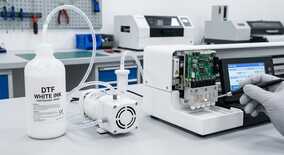
Білі чорнила в DTF друку — це головний біль усіх операторів. Якщо кольорові чорнила працюють відносно стабільно, то з білими завжди виникають проблеми. Чому так відбувається та як з цим боротися?
Корінь усіх проблем з білими чорнилами криється в їх фізико-хімічному складі. На відміну від кольорових чорнил, які містять розчинні або тонкодисперсні барвники, білі чорнила базуються на мінеральному пігменті діоксид титану (TiO2).
▶ Чому TiO2 створює проблеми
Діоксид титану — це неорганічний білий пігмент з унікальними оптичними властивостями. Він забезпечує найвищу укривну здатність серед усіх білих пігментів, що робить його незамінним для DTF друку. Однак його фізичні характеристики створюють серйозні виклики:
▸ Розмір частинок
- TiO2 (білі чорнила): 200-350 нм
- Органічні барвники (кольорові чорнила): 2-5 нм
▸ Густина
- TiO2 (білі чорнила): 4,23 г/см³
- Органічні барвники (кольорові чорнила): 1,2-1,8 г/см³
▸ Схильність до седиментації
- TiO2 (білі чорнила): Висока
- Органічні барвники (кольорові чорнила): Низька
▸ Абразивність
- TiO2 (білі чорнила): Помірна
- Органічні барвники (кольорові чорнила): Мінімальна
Високий питомий вага TiO2 у поєднанні з відносно великими розмірами частинок призводить до гравітаційного осадження. Навіть у добре стабілізованих чорнилах пігмент поступово опускається вниз, створюючи неоднорідність концентрації.
▶ Системи циркуляції: необхідність, а не розкіш
Для боротьби з седиментацією TiO2 сучасні DTF принтери обладнуються системами циркуляції білих чорнил. Ці системи постійно перемішують чорнила, запобігаючи осадженню пігменту.
Існує кілька типів систем циркуляції:
1. Пасивна циркуляція (Agitation)
Найпростіший варіант — механічне перемішування за допомогою магнітної мішалки або вібраційного пристрою. Ефективна для невеликих об'ємів чорнил, але має обмеження по потужності.
2. Активна циркуляція (White Ink Circulation)
Повноцінна система з помпою, що забезпечує постійний рух чорнил по замкнутому контуру. Включає:
- Циркуляційна помпа
- Фільтри тонкого очищення
- Датчики тиску
- Система контролю швидкості потоку
3. Гібридна система
Поєднання активної циркуляції з ультразвуковою обробкою для додаткової диспергації пігменту.
Найефективніші системи циркуляції встановлені на принтерах Epson SureColor F2100, Brother GTX Pro Bulk та Roland Texart RT-640.
▶ Графіки обслуговування білих чорнил
Регулярне обслуговування — ключ до стабільної роботи з білими чорнилами. Пропонуємо перевірений графік:
▸ Щодня
- Операція: Тест дюз + легка очистка
- Мета: Контроль якості друку
▸ Щотижня
- Операція: Повна очистка головки
- Мета: Видалення накопичених відкладень
▸ Щомісяця
- Операція: Заміна чорнил у системі
- Мета: Оновлення стабілізаторів
▸ Щоквартально
- Операція: Промивка системи циркуляції
- Мета: Очищення фільтрів та магістралей
Важливо: частота обслуговування залежить від інтенсивності використання. При щоденному друку може знадобитися більш частота очистка.
▶ Comparison брендів білих чорнил
Якість білих чорнил суттєво відрізняється між виробниками. Ось порівняння топових брендів:
▸ Dupont Artistri
- Стабільність: Відмінна
- Укривна здатність: Висока
- Ціна ($/л): 180-220
- Рекомендація: Преміум клас
▸ Sensient Xennia
- Стабільність: Хороша
- Укривна здатність: Висока
- Ціна ($/л): 150-180
- Рекомендація: Професійний
▸ Ink-Mate DTF
- Стабільність: Задовільна
- Укривна здатність: Середня
- Ціна ($/л): 80-120
- Рекомендація: Економ клас
▸ Flying Colors
- Стабільність: Хороша
- Укривна здатність: Висока
- Ціна ($/л): 120-150
- Рекомендація: Оптимальна
Рекомендація: для початківців радимо Flying Colors — оптимальне співвідношення ціни та якості. Для комерційного виробництва краще обрати Dupont Artistri.
▶ Діагностика проблем з білими чорнилами
Найпоширеніші проблеми та їх ознаки:
1. Засорення дюз
Ознаки: пропуски ліній, нерівномірність покриття, смуги на відбитку.
Причини: висихання чорнил у дюзах, накопичення пігменту, пошкодження мембран.
Рішення:
- Замочування головки у спеціальному розчиннику на 10-15 хвилин
- М'яка очистка з низьким тиском
- Ультразвукова ванна (для знімних головок)
2. Седиментація пігменту
Ознаки: різна інтенсивність білого кольору, осад на дні картриджів.
Рішення:
- Ручне струшування картриджів 2-3 рази на день
- Активація системи циркуляції
- Заміна чорнил свіжими
3. Забруднення системи подачі
Ознаки: зміна відтінку білого, поява сторонніх включень.
Рішення: повна промивка системи дистильованою водою з додаванням очищувача.
▶ Превентивні заходи
Для мінімізації проблем з білими чорнилами дотримуйтесь цих правил:
- Контроль температури: зберігайте чорнила при 18-25°C
- Уникайте тривалих простоїв: друкуйте білим щонайменше раз на день
- Якість води: використовуйте тільки дистильовану воду для промивки
- Фільтрація повітря: встановіть фільтри для запобігання потрапляння пилу
- Регулярна калібровка: перевіряйте налаштування принтера щотижня
▶ Економічні аспекти
Білі чорнила — найдорожчий компонент DTF друку. При середній вартості 150 $/л витрати на білі чорнила можуть становити до 40% загальних витрат на чорнила.
Оптимізація витрат:
- Налаштування оптимальної щільності білого шару (80-100% замість 150%)
- Використання RIP-програм з інтелектуальним управлінням білими чорнилами
- Групування замовлень для мінімізації перемикань
▶ Майбутнє білих чорнил DTF
Виробники активно працюють над вдосконаленням формул білих чорнил. Основні напрямки досліджень:
- Наноструктурований TiO2 — частинки розміром до 100 нм для кращої стабільності
- Поверхневі модифікатори — покриття частинок для зменшення агрегації
- Альтернативні білі пігменти — цинк оксид, літопон з покращеними характеристиками
Експерти прогнозують, що протягом 2-3 років білі чорнила стануть такими ж надійними, як і кольорові.
▶ Висновки
Білі чорнила залишаються найскладнішим аспектом DTF друку, але розуміння їх природи та дотримання правил обслуговування дозволяє мінімізувати проблеми. Ключові моменти:
- Обов'язково використовуйте систему циркуляції
- Дотримуйтесь графіків обслуговування
- Інвестуйте в якісні чорнила перевірених брендів
- Не економте на профілактиці — вона коштує менше, ніж ремонт
При правильному підході білі чорнила стануть надійним інструментом для створення яскравих та довговічних DTF відбитків.