
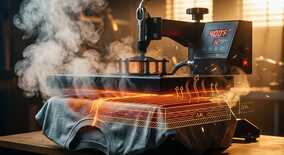
Термопрес - це не просто "гаряча праска". Це прецизійний інструмент, що керує складними фізико-хімічними процесами. Успішне термотрансферне перенесення залежить від точного балансу трьох параметрів: температури, часу та тиску. Розуміння наукових принципів, що стоять за кожним з цих факторів, допомагає досягти ідеальних результатів та уникнути поширених помилок.
▶ Фізика теплопередачі в термопресі
Теплопередача в термопресі відбувається через три механізми: теплопровідність, конвекцію та теплове випромінювання. Основний механізм - теплопровідність, при якій теплова енергія передається від гарячої плити термопресу через матеріал до клейового шару.
▶ Закон теплопровідності Фур'є
Швидкість теплопередачі визначається законом Фур'є:
q = -k × A × (dT/dx)
де:
- q - тепловий потік
- k - коефіцієнт теплопровідності матеріалу
- A - площа поверхні
- dT/dx - градієнт температури
Це означає, що товщі матеріали потребують більше часу для прогріву до необхідної температури, а матеріали з кращою теплопровідністю (наприклад, метали) нагріваються швидше за тканини.
▶ Теплова ємність та теплова інерція
Різні матеріали мають різну теплову ємність - кількість енергії, необхідної для нагріву одиниці маси на один градус. Це пояснює, чому:
▸ Бавовна 100%
- Теплова ємність (Дж/кг·К): 1300-1500
- Час нагріву: Повільний
- Особливості пресування: Потребує більше часу
▸ Поліестер
- Теплова ємність (Дж/кг·К): 1000-1200
- Час нагріву: Середній
- Особливості пресування: Стандартні параметри
▸ Поліестер/бавовна
- Теплова ємність (Дж/кг·К): 1100-1400
- Час нагріву: Середній
- Особливості пресування: Компромісні налаштування
▸ Алюміній (заготовки)
- Теплова ємність (Дж/кг·К): 900
- Час нагріву: Швидкий
- Особливості пресування: Зменшений час та температура
▶ Хімія клеїв та активація адгезії
▶ Термоактивовані клеї
Більшість термотрансферних матеріалів використовують термоактивовані клеї - полімерні сполуки, які змінюють свої властивості при нагріві. Основні типи:
- Термопластичні клеї - розм'якшуються при нагріві, затвердіють при охолодженні. Зворотний процес.
- Термореактивні клеї - утворюють незворотні хімічні зв'язки при нагріві. Більш міцні.
- Гібридні системи - поєднують переваги обох типів.
▶ Температура активації та температурні зони
Кожен клей має свою температуру активації - мінімальну температуру, при якій починається процес адгезії. Але оптимальне перенесення відбувається в певному діапазоні:
▸ DTF (прямий)
- Температура активації: 140°C
- Оптимальний діапазон: 160-170°C
- Максимальна температура: 180°C
- Що відбувається при перегріві: Пошкодження порошку, жовтіння
▸ DTF (холодний пілінг)
- Температура активації: 135°C
- Оптимальний діапазон: 150-160°C
- Максимальна температура: 170°C
- Що відбувається при перегріві: Передчасне затвердіння
▸ Сублімація
- Температура активації: 180°C
- Оптимальний діапазон: 200-220°C
- Максимальна температура: 240°C
- Що відбувається при перегріві: Деформація кольорів
▸ HTV (флекс)
- Температура активації: 130°C
- Оптимальний діапазон: 140-160°C
- Максимальна температура: 180°C
- Що відбувається при перегріві: Плавлення, деформація
▸ HTV (флок)
- Температура активації: 120°C
- Оптимальний діапазон: 130-150°C
- Максимальна температура: 170°C
- Що відбувається при перегріві: Втрата текстури
▶ Роль часу в процесі адгезії
▶ Кінетика хімічних реакцій
Процес формування адгезійного зв'язку не є миттєвим. Він підпорядковується рівнянню Арреніуса, яке описує залежність швидкості хімічної реакції від температури:
k = A × e^(-Ea/RT)
де:
- k - константа швидкості реакції
- A - передекспоненційний фактор
- Ea - енергія активації
- R - газова стала
- T - абсолютна температура
Це означає, що при вищих температурах реакція йде швидше, але все ж потребує часу для завершення.
▶ Фази процесу перенесення
Процес термотрансферного перенесення складається з кількох фаз:
- Фаза нагріву (0-20% часу) - матеріал нагрівається до робочої температури
- Фаза активації (20-60% часу) - клей активується та починає проникати в структуру тканини
- Фаза закріплення (60-100% часу) - формується міцний адгезійний зв'язок
Недостатній час призводить до слабкої адгезії, а надмірний - до деградації матеріалів або клею.
▶ Оптимальний час для різних технологій
▸ DTF на бавовні
- Мінімальний час: 12 сек
- Оптимальний час: 15-18 сек
- Максимальний час: 25 сек
- Наслідки перетримування: Жовтіння тканини
▸ DTF на поліестері
- Мінімальний час: 8 сек
- Оптимальний час: 10-15 сек
- Максимальний час: 20 сек
- Наслідки перетримування: Деформація волокон
▸ Сублімація поліестер
- Мінімальний час: 45 сек
- Оптимальний час: 60-90 сек
- Максимальний час: 120 сек
- Наслідки перетримування: Пересублімація, блюрінг
▸ HTV флекс
- Мінімальний час: 10 сек
- Оптимальний час: 12-15 сек
- Максимальний час: 20 сек
- Наслідки перетримування: Втрата еластичності
▸ HTV флок
- Мінімальний час: 8 сек
- Оптимальний час: 10-12 сек
- Максимальний час: 18 сек
- Наслідки перетримування: Спалення ворсу
▶ Механіка тиску та розподіл навантаження
▶ Закон Паскаля та рівномірний розподіл тиску
Тиск у термопресі повинен розподілятися рівномірно по всій площі контакту. Згідно з законом Паскаля, тиск у замкнутій системі передається однаково у всіх напрямках. Однак реальні термопреси мають нерівномірності через:
- Деформацію нагрівальної плити при нагріві
- Нерівномірну товщину підложки
- Зношування гумової підкладки
- Неправильне налаштування паралельності плит
▶ Контактний тиск та площа контакту
Ефективність теплопередачі залежить від якості контакту між поверхнями. При недостатньому тиску утворюються повітряні кишені, які погіршують теплопередачу. Формула для розрахунку площі реального контакту:
A_real = A_nominal × (P/P_critical)^n
де n - коефіцієнт, що залежить від типу поверхні (зазвичай 0.5-1.0).
▶ Оптимальні значення тиску
▸ DTF
- Мінімальний тиск: 2-3 бар
- Оптимальний тиск: 4-6 бар
- Максимальний тиск: 8 бар
- Наслідки надмірного тиску: Витискування клею, деформація
▸ Сублімація тканина
- Мінімальний тиск: 1-2 бар
- Оптимальний тиск: 2-4 бар
- Максимальний тиск: 6 бар
- Наслідки надмірного тиску: Сплющування фактури
▸ Сублімація метал
- Мінімальний тиск: 3-4 бар
- Оптимальний тиск: 5-7 бар
- Максимальний тиск: 10 бар
- Наслідки надмірного тиску: Деформація заготовки
▸ HTV
- Мінімальний тиск: 3-4 бар
- Оптимальний тиск: 5-7 бар
- Максимальний тиск: 9 бар
- Наслідки надмірного тиску: Витискування клею
▸ Фольга
- Мінімальний тиск: 5-6 бар
- Оптимальний тиск: 7-9 бар
- Максимальний тиск: 12 бар
- Наслідки надмірного тиску: Прорив основи
▶ Специфіка роботи з різними типами термопресів
▶ Плоскі термопреси
Термопреси для футболок - найпоширеніший тип. Особливості:
- Рівномірний розподіл тиску - при правильному налаштуванні
- Стабільна температура - велика теплова маса плити
- Можливість роботи з різними товщинами - регульоване віддалення
▶ Циліндричні термопреси
Термопреси для кружок використовують інший принцип теплопередачі:
- Обгортальний контакт - тепло передається по всій окружності
- Автоматичний тиск - завдяки пружинному механізму
- Рівномірне нагрівання - завдяки циліндричній формі
▶ Кепочні термопреси
Термопреси для кепок мають найскладнішу конструкцію:
- Адаптивний тиск - підлаштування під форму козирка
- Зональне нагрівання - різна температура на різних ділянках
- Компенсація кривизни - спеціальні механізми стиснення
▶ Вплив параметрів навколишнього середовища
▶ Вологість повітря
Вологість повітря значно впливає на процес термотрансферу:
- Висока вологість (>70%) - може призвести до конденсації пари під перенесенням, що погіршує адгезію
- Низька вологість (<30%) - статична електрика може заважати точному позиціонуванню
- Оптимальна вологість (45-65%) - забезпечує найкращі умови
▶ Температура приміщення
Температура навколишнього середовища впливає на:
- Швидкість нагріву матеріалу
- Початкову температуру заготовки
- Швидкість охолодження після пресування
Оптимальна температура приміщення: 18-25°C.
▶ Діагностика та усунення проблем
▶ Проблеми з адгезією
▸ Слабке тримання по краях
- Можлива причина: Нерівномірний тиск
- Рішення: Перевірити паралельність плит, замінити підкладку
▸ Центр не тримає
- Можлива причина: Деформація плити
- Рішення: Калібрування термопресу, заміна плити
▸ Повне відшарування
- Можлива причина: Низька temperature/час
- Рішення: Збільшити температуру на 10-15°C або час на 20-30%
▸ Клей залишається на носії
- Можлива причина: Висока температура
- Рішення: Зменшити температуру на 10-20°C
▶ Проблеми з якістю перенесення
▸ Нерівномірність кольору
- Можлива причина: Неправильний температурний профіль
- Рішення: Калібрування термопресу, заміна датчиків
▸ Ореоли навколо зображення
- Можлива причина: Занадто високий тиск
- Рішення: Зменшити тиск на 1-2 бари
▸ Нечіткі краї
- Можлива причина: Рух під час пресування
- Рішення: Збільшити тиск, використати позиціонування
▸ Жовтіння тканини
- Можлива причина: Перегрів
- Рішення: Зменшити температуру та час
▶ Оптимізація параметрів для різних завдань
▶ DTF на різних тканинах
▸ Бавовна 100%
- Температура (°C): 160-165
- Час (сек): 15-18
- Тиск (бар): 4-5
- Особливості: Попереднє прогрівання 5 сек
▸ Поліестер 100%
- Температура (°C): 150-155
- Час (сек): 10-12
- Тиск (бар): 3-4
- Особливості: Ризик деформації при перегріві
▸ 50/50 бавовна/поліестер
- Температура (°C): 155-160
- Час (сек): 12-15
- Тиск (бар): 4-5
- Особливості: Компромісні налаштування
▸ Тріблендт (3 компоненти)
- Температура (°C): 150-160
- Час (сек): 12-18
- Тиск (бар): 4-6
- Особливості: Тестування на зразку обов'язкове
▸ Спортивна тканина (драй-фіт)
- Температура (°C): 145-150
- Час (сек): 8-12
- Тиск (бар): 3-4
- Особливості: Низька температура через синтетику
▶ Сублімація на різних матеріалах
▸ Поліестерна тканина
- Температура (°C): 200-210
- Час (сек): 60-90
- Тиск (бар): 2-3
- Особливості: Захисний папір обов'язковий
▸ Керамічна плитка
- Температура (°C): 180-190
- Час (сек): 120-180
- Тиск (бар): 3-4
- Особливості: Повільний та рівномірний нагрів
▸ Алюмінієві заготовки
- Температура (°C): 190-200
- Час (сек): 60-120
- Тиск (бар): 5-7
- Особливості: Швидкий нагрів, контроль temperature
▸ Скляні поверхні
- Температура (°C): 170-180
- Час (сек): 180-240
- Тиск (бар): 2-3
- Особливості: Ризик тріщин при різкому нагріві
▶ Просунуті техніки та інновації
▶ Багатозонне нагрівання
Сучасні професійні термопреси оснащуються системами багатозонного нагрівання, що дозволяє:
- Компенсувати нерівномірність розподілу тепла
- Створювати різні температурні зони для складних перенесень
- Автоматично підлаштовуватися під товщину матеріалу
▶ Автоматичне регулювання тиску
Пневматичні системи автоматичного регулювання тиску забезпечують:
- Постійний тиск незалежно від товщини матеріалу
- Компенсацію зношування підкладок
- Відтворюваність результатів
▶ Системи моніторингу в реальному часі
IoT-інтеграція дозволяє контролювати:
- Фактичну температуру по всій площі плити
- Розподіл тиску
- Час циклу та його стабільність
- Статистику використання та ефективності
▶ Економічні аспекти оптимізації параметрів
▶ Енергоефективність
Правильно підібрані параметри не тільки покращують якість, але й економлять енергію:
- Мінімально необхідна температура зменшує споживання електроенергії
- Оптимальний час циклу збільшує продуктивність
- Правильний тиск зменшує зношування обладнання
▶ Зниження відходів
Точні параметри зменшують кількість браку:
- Менше переробок через неякісне перенесення
- Збільшення терміну служби трансферних матеріалів
- Зменшення споживання клеїв та порошків
▶ Майбутнє технологій термопресування
▶ Розвиток матеріалів
Нові покоління термотрансферних матеріалів потребуватимуть:
- Нижчих температур активації (екологічність)
- Коротших часів пресування (продуктивність)
- Менших тисків (універсальність)
▶ Інтелектуальні системи управління
Майбутні термопреси матимуть:
- AI-оптимізацію параметрів на основі типу матеріалу
- Предиктивне обслуговування
- Автоматичну компенсацію зношування
- Інтеграцію з системами якості продукції
▶ Висновки
Фізика термопресу - це складна взаємодія теплопередачі, хімічних реакцій та механічних процесів. Розуміння цих принципів дозволяє:
- Досягти максимальної якості перенесення на будь-яких матеріалах
- Оптимізувати параметри для конкретних завдань та матеріалів
- Діагностувати та усунути проблеми на основі наукового підходу
- Зменшити відходи та підвищити ефективність виробництва
- Прогнозувати результат перед виконанням роботи
Пам'ятайте: кожен параметр - температура, час і тиск - впливає на результат. Змінюючи один параметр, необхідно враховувати вплив на інші. Тільки комплексний підхід, заснований на розумінні фізичних процесів, гарантує стабільно високі результати в термотрансферному друці.
Інвестиції в розуміння науки термопресування окупаються через підвищення якості продукції, зменшення браку та можливість працювати з ширшим спектром матеріалів та завдань.